
Communication and Writing AI Tools
AI Writing Assistants
Modern AI writing assistants have revolutionized how we create content, moving far beyond simple spell-checkers to become sophisticated writing partners. **Grammarly Business** leads the pack with its advanced tone detection and clarity suggestions, helping professionals craft emails that convert and documents that engage. The platform's AI analyzes context to suggest improvements that align with your brand voice, making it invaluable for teams maintaining consistent communication standards.
For content creators, **Jasper AI** has emerged as a powerhouse for generating blog posts, social media content, and marketing copy. Its template library covers over 50 use cases, from product descriptions to press releases. What sets Jasper apart is its ability to maintain brand voice consistency across different content types, crucial for businesses scaling their content production.
**Notion AI** integrates seamlessly into existing workflows, offering writing assistance directly within your workspace. It excels at brainstorming, summarizing meeting notes, and transforming bullet points into polished prose. The tool's strength lies in its contextual understanding of your existing content, making suggestions that feel naturally integrated rather than artificially imposed.
Email Management and Automation
Email productivity has reached new heights with AI-powered management tools that learn from your communication patterns. **Superhuman** combines AI with human-centered design to deliver the fastest email experience available. Its AI features include automatic email categorization, smart replies that match your writing style, and predictive scheduling that finds optimal meeting times across time zones.
**Boomerang's Respondable** analyzes your emails before sending, providing real-time feedback on tone, length, and likelihood of receiving a response. This practical AI tool has helped users increase response rates by up to 40% by suggesting optimal send times and message structures based on recipient behavior patterns.
For teams managing high volumes of customer inquiries, **Front's AI** capabilities transform shared inboxes into intelligent routing systems. The platform automatically assigns emails to the most qualified team member while suggesting response templates based on inquiry type and customer history.
Translation and Language Tools
Global communication barriers continue dissolving thanks to sophisticated translation AI that preserves nuance and context. **DeepL Pro** consistently outperforms competitors in accuracy tests, particularly for European languages and technical documentation. Its API integration allows businesses to translate documents while maintaining original formatting, essential for international operations.
**Google Translate's** real-time conversation mode has become indispensable for face-to-face international interactions, while **Microsoft Translator** excels in business environments with its PowerPoint integration and multi-device conversation features. Both platforms now support over 100 languages with varying degrees of accuracy.
**Otter.ai** bridges the gap between speech and text with AI transcription that captures nuance, speaker identification, and action items. The platform's ability to integrate with Zoom, Teams, and Google Meet makes it essential for remote teams requiring accurate meeting records. Its search functionality allows users to find specific discussions across months of recorded content.
Productivity and Task Management
Smart Calendar and Scheduling
AI-powered scheduling tools have evolved to become proactive productivity partners that understand your work patterns and priorities. **Calendly's** AI features now include smart availability detection that accounts for commute time, energy levels throughout the day, and meeting preparation requirements. The platform learns from your scheduling preferences to automatically suggest optimal meeting times that maximize productivity while minimizing conflicts.
**Motion** takes calendar optimization further by combining project management with intelligent scheduling. This practical AI tool analyzes your task list, deadlines, and calendar availability to automatically schedule focused work time. Users report saving 3-4 hours weekly on scheduling decisions alone, as the AI continuously reorganizes priorities based on changing deadlines and availability.
**Clockify's AI** time tracking provides insights that transform how teams understand their productivity patterns. The automation tool identifies time drains, suggests blocking strategies for deep work, and predicts project completion times based on historical data. Its reporting features help managers make data-driven decisions about resource allocation and deadline setting.
Project Management Enhancement
Modern project management platforms leverage AI to predict bottlenecks, optimize resource allocation, and automate routine administrative tasks. **Monday.com's** AI capabilities include automatic task assignment based on team member expertise and availability, while its predictive analytics identify projects at risk of delay before problems become critical.
**Asana Intelligence** transforms project data into actionable insights, automatically detecting duplicate tasks, suggesting template improvements, and identifying workflow inefficiencies. The platform's goal-tracking AI helps teams maintain focus on high-impact activities while reducing time spent on status updates and progress reporting.
**ClickUp AI** stands out for its versatility, offering writing assistance for project descriptions, automatic subtask generation from main objectives, and intelligent document summarization. The platform's AI can transform meeting notes into structured project plans, complete with assigned responsibilities and realistic timelines.
Note-taking and Knowledge Management
AI-enhanced note-taking systems have transformed information capture and retrieval, making knowledge work more efficient and insights more discoverable. **Obsidian** with AI plugins creates intelligent connections between notes, suggesting relevant links and identifying knowledge gaps in your personal database. The platform's graph view powered by AI helps visualize how ideas connect across different projects and time periods.
**Roam Research's** AI features excel at surfacing serendipitous connections between seemingly unrelated notes, fostering creative thinking and innovation. The platform's automatic backlinking suggests relationships you might have missed, while its AI-powered queries help extract insights from large note collections.
**Logseq** offers local-first AI integration that keeps your knowledge secure while providing intelligent search and content suggestions. Its block-level AI features help restructure information for better clarity and automatically generate summaries of lengthy research sessions.
Creative and Design AI Tools
Image and Video Creation
Visual content creation has been democratized through AI platforms that enable anyone to produce professional-quality images and videos. **Midjourney** continues leading artistic image generation, offering unprecedented control over style, composition, and mood. The platform's latest updates include style consistency features that maintain visual coherence across brand campaigns and marketing materials.
**DALL-E 3** integration with ChatGPT has created seamless workflows for content creators who need custom imagery. The AI platform excels at producing images that match specific brand guidelines and can generate multiple variations for A/B testing. Its ability to edit specific portions of images while maintaining overall coherence makes it invaluable for iterative design processes.
**Runway ML** has revolutionized video editing with AI features that automate complex tasks like background replacement, object removal, and style transfer. The automation tool enables small businesses to produce video content that previously required expensive production teams, leveling the playing field for content marketing.
**Luma AI** specializes in 3D content creation, allowing users to capture real-world objects and environments for use in digital applications. This practical AI tool has found applications in e-commerce product visualization, real estate virtual tours, and educational content development.
Music and Audio Production
Audio creation and editing have been transformed by AI tools that understand musical theory, acoustic principles, and audience preferences. **AIVA** (Artificial Intelligence Virtual Artist) composes original music across multiple genres, offering customizable emotional themes and instrumental arrangements. Musicians and content creators use AIVA to generate background music that perfectly matches their project's mood and pacing requirements.
**Adobe Podcast AI** has revolutionized audio editing with features like automatic noise reduction, echo removal, and voice enhancement that rival professional studio equipment. The platform's AI can separate multiple speakers from a single recording and enhance each voice individually, making it indispensable for podcast production and interview content.
**Mubert** generates infinite, royalty-free music streams tailored to specific activities, moods, or brand requirements. Content creators appreciate its ability to produce background music that never repeats, ensuring consistent audio branding across long-form content without licensing complications.
**Cleanvoice AI** automatically removes filler words, mouth sounds, and awkward pauses from audio recordings, reducing editing time by up to 80%. The automation tool's ability to maintain natural speech patterns while removing distractions makes it essential for professional podcast and video production.
Design and Presentation Tools
Design automation has reached new sophistication levels, enabling non-designers to create professional visual materials while enhancing the capabilities of experienced designers. **Canva's Magic Design** generates complete design layouts from simple text prompts, suggesting color schemes, typography, and layouts that align with current design trends and brand guidelines.
**Gamma** revolutionizes presentation creation by transforming outlines or documents into fully designed slide decks. The AI platform understands information hierarchy and automatically creates visual elements that support key messages. Users report reducing presentation preparation time by 70% while improving visual quality and audience engagement.
**Figma's AI** features assist with design system creation and maintenance, automatically suggesting component variations and identifying inconsistencies across large design projects. The platform's AI can generate design tokens from existing styles and predict user interaction patterns based on interface layouts.
**Beautiful.AI** creates presentations that automatically adjust layouts as content changes, ensuring visual consistency throughout the design process. The automation tool's intelligent slide suggestions help users structure information more effectively while maintaining professional aesthetic standards.

Check each product page for other buying options. Price and other details may vary based on product size and color.
Highly rated by customers for quality and value. Click to see current pricing and customer reviews.
More Top-Rated Options


Financial and Business Management
Personal Finance Optimization
AI-powered financial management tools have evolved beyond simple expense tracking to provide personalized insights and proactive financial guidance. **Mint's** AI categorizes transactions with 95% accuracy, identifies unusual spending patterns, and provides customized budgeting recommendations based on income fluctuations and lifestyle changes. The platform's predictive analytics help users avoid overdrafts and identify opportunities for increased savings.
**YNAB (You Need A Budget)** incorporates AI coaching that learns from your financial behavior to provide increasingly personalized advice. The practical AI tool analyzes spending patterns to predict future cash flow needs and suggests budget adjustments before financial stress occurs. Users typically reduce monthly expenses by 15-20% within the first quarter of implementation.
**Personal Capital's** AI investment advisor provides portfolio optimization recommendations based on risk tolerance, time horizons, and market conditions. The platform's AI continuously monitors investment performance and suggests rebalancing strategies that have historically improved returns while reducing volatility.
**Simplifi** by Quicken uses AI to create spending forecasts that account for seasonal variations, irregular income, and upcoming major expenses. The automation tool's ability to predict cash flow needs helps users make informed decisions about discretionary spending and savings contributions.
Business Intelligence and Analytics
Business intelligence has been transformed by AI platforms that turn raw data into actionable insights without requiring technical expertise. **Tableau's** AI features include automatic data preparation, anomaly detection, and natural language query processing that allows users to ask complex business questions in plain English.
**Power BI's** AI capabilities provide automated insights that surface trends, outliers, and correlations across multiple data sources. The platform's AI can generate executive summaries, predict key performance indicators, and suggest strategic actions based on data patterns. Small businesses particularly benefit from its ability to provide enterprise-level analytics at accessible price points.
**Looker's** AI-powered data modeling automatically suggests optimal database relationships and identifies data quality issues before they impact reporting accuracy. The platform's machine learning features help businesses predict customer churn, optimize inventory levels, and identify growth opportunities through pattern recognition.
**Sisense** specializes in making complex data accessible through AI-driven dashboards that adapt to user roles and information needs. The automation tool automatically highlights relevant metrics and provides context for data changes, enabling faster decision-making across all organizational levels.
Customer Service Automation
Customer service AI has reached human-level performance for many common inquiries while providing 24/7 availability and consistent service quality. **Zendesk's Answer Bot** resolves 40% of customer inquiries without human intervention while seamlessly escalating complex issues to appropriate agents with full context and conversation history.
**Intercom's Resolution Bot** uses natural language processing to understand customer intent and provide accurate responses across multiple communication channels. The AI platform learns from successful human agent interactions to continuously improve response quality and resolution rates.
**Freshworks** AI provides predictive customer support that identifies potential issues before customers report them. The platform's AI analyzes usage patterns, system logs, and historical data to proactively reach out with solutions, significantly improving customer satisfaction scores.
**Ada's** conversational AI platform creates branded chatbots that maintain company voice and personality while handling complex, multi-step customer journeys. The automation tool's ability to integrate with existing business systems enables it to provide personalized responses based on customer history and account status.
Learning and Education AI Tools
Personalized Learning Platforms
Educational AI has revolutionized learning by adapting to individual pace, learning style, and knowledge gaps in real-time. **Khan Academy's Khanmigo** provides personalized tutoring that adjusts difficulty levels based on student performance and offers hints that guide learners toward understanding rather than simply providing answers. The AI platform tracks learning progress across subjects to identify optimal study schedules and review timing.
**Coursera's** AI recommendation system analyzes career goals, current skills, and learning preferences to suggest optimal course sequences and skill development paths. The platform's AI can predict course completion likelihood and provides personalized motivation strategies that increase completion rates by 30%.
**Duolingo's** language learning AI creates personalized lesson plans that adapt to individual strengths and weaknesses while maintaining engagement through gamification. The practical AI tool's spaced repetition algorithm optimizes vocabulary retention and provides pronunciation feedback that rivals human instruction quality.
**Carnegie Learning's MATHia** platform uses AI to provide step-by-step guidance through complex mathematical problems, adapting its teaching approach based on student responses and learning patterns. The automation tool helps teachers identify students who need additional support before they fall behind.
Research and Information Processing
Research workflows have been transformed by AI tools that can process vast amounts of information and extract relevant insights with unprecedented speed and accuracy. **Semantic Scholar's** AI features help researchers discover relevant papers, identify research trends, and understand citation networks across academic disciplines. The platform's AI can summarize complex research findings and suggest related studies that might otherwise be overlooked.
**Elicit** uses AI to answer research questions by finding and summarizing relevant papers, extracting key information, and identifying gaps in current knowledge. Researchers report reducing literature review time by 60% while improving the comprehensiveness of their research foundation.
**Research Rabbit** creates interactive maps of research topics, using AI to identify connections between papers and suggest new research directions. The platform's collaborative features enable research teams to share insights and build upon each other's discoveries more effectively.
**Zotero's** AI-powered citation management automatically extracts metadata from sources, suggests relevant tags, and identifies potential citation errors before publication. The automation tool's integration with writing platforms streamlines the research-to-publication workflow for academic and professional writers.
Skill Development and Training
Professional skill development has been enhanced by AI platforms that provide personalized learning paths and real-time feedback on skill application. **LinkedIn Learning's** AI analyzes career progression data to recommend skills training that correlates with promotion and salary increases in specific industries and roles.
**Pluralsight's** AI-powered skill assessments create personalized learning paths that focus on knowledge gaps while avoiding redundant content. The platform's AI can predict job readiness based on skill assessments and suggests portfolio projects that demonstrate competency to potential employers.
**Coursera for Business** uses AI to align employee skill development with organizational needs, predicting which skills will become critical and recommending training programs that maximize return on educational investment.
**Udacity's** AI mentorship program provides personalized feedback on project work, code reviews, and career guidance that adapts to individual learning pace and career goals. The practical AI tool's industry connections help learners understand how skills translate to job market requirements.
Health and Lifestyle AI Applications
Health Monitoring and Wellness
Health and wellness AI has evolved to provide personalized insights that help individuals make informed decisions about their physical and mental well-being. **MyFitnessPal's** AI nutrition tracking learns from eating patterns to provide personalized meal suggestions that meet dietary goals while accommodating taste preferences and lifestyle constraints. The platform's AI can identify nutrient deficiencies and suggest food swaps that improve overall nutrition quality.
**Fitbit's** AI sleep coaching analyzes sleep patterns, daily activities, and environmental factors to provide personalized recommendations for improving sleep quality. The practical AI tool's insights help users understand how lifestyle choices impact sleep and recovery, leading to more informed decisions about daily routines.
**Headspace's** AI meditation guide adapts mindfulness sessions to current stress levels, available time, and personal goals. The platform's AI tracks emotional patterns and suggests interventions that prevent stress buildup and promote long-term mental wellness.
**Ada Health** provides AI-powered symptom assessment that helps users understand when to seek professional medical attention. The automation tool's clinical decision support has been validated by medical professionals and provides valuable health insights while emphasizing the importance of professional medical care.
Smart Home Integration
Smart home AI has matured to create truly intelligent living environments that anticipate needs and optimize comfort while reducing energy consumption. **Google Nest's** AI learns household patterns to optimize heating and cooling schedules, reducing energy bills by up to 15% while maintaining preferred comfort levels throughout the day.
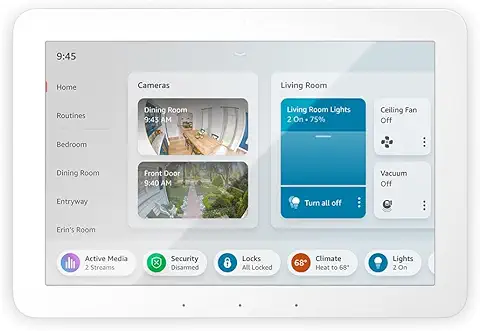
**Amazon Alexa's** routines now use AI to predict daily needs and automatically adjust smart home devices based on weather, calendar events, and historical preferences. The platform's AI can coordinate complex multi-device scenarios that create optimal environments for work, relaxation, or sleep.
**SmartThings** AI provides comprehensive home automation that integrates security, energy management, and comfort systems into cohesive experiences. The platform's AI learns from user behavior to suggest optimizations that improve convenience while reducing resource consumption.
**Philips Hue's** AI lighting system adapts to circadian rhythms and activities, automatically adjusting color temperature and brightness to support natural energy patterns and improve sleep quality. The automation tool's integration with other smart home devices creates lighting scenarios that enhance productivity and well-being.
Travel and Navigation Enhancement
Travel planning and navigation have been revolutionized by AI systems that consider real-time conditions, personal preferences, and predictive analytics to optimize journeys. **Google Maps'** AI now provides arrival time predictions that account for traffic patterns, parking availability, and walking speeds, with accuracy rates exceeding 97% in urban environments.
**Waze's** community-driven AI learns from collective user behavior to predict traffic patterns, road hazards, and optimal route alternatives before conditions deteriorate. The practical AI tool's ability to reroute traffic proactively has reduced commute times by an average of 12 minutes for regular users.
**TripIt's** AI travel organization automatically creates comprehensive itineraries from email confirmations while providing real-time updates about delays, gate changes, and alternative options. The platform's AI can predict potential travel disruptions and suggest preventive actions that minimize inconvenience.
**Hopper's** price prediction AI analyzes billions of travel data points to recommend optimal booking times for flights and hotels. The automation tool's price forecasting accuracy of 95% helps travelers save an average of 20% on travel expenses through strategic timing of purchases.
How to Choose the Right AI Tools
Assessment Framework
Selecting appropriate AI tools requires a systematic evaluation approach that aligns technology capabilities with specific needs and organizational constraints. Begin by conducting a comprehensive workflow analysis that identifies repetitive tasks, information bottlenecks, and decision-making processes that could benefit from automation or AI assistance. Document current time investments in different activities to establish baseline metrics for measuring AI tool effectiveness.
**Needs prioritization** should focus on high-impact, low-complexity implementations first. Practical AI tools that address daily pain points often provide immediate value and build organizational confidence in AI adoption. Consider starting with tools that enhance existing processes rather than requiring complete workflow redesigns.
**User experience evaluation** becomes critical when multiple team members will interact with AI platforms. Tools with intuitive interfaces and minimal learning curves typically achieve higher adoption rates and sustained usage. Test AI tools with actual users during trial periods to identify potential resistance or confusion before making purchasing decisions.
**Accuracy requirements** vary significantly across different applications. Financial AI tools require higher precision than creative assistance platforms, while customer service automation tools need different accuracy profiles than internal productivity applications. Establish clear performance benchmarks that align with your specific use cases and quality standards.
Integration Considerations
Successful AI tool implementation depends heavily on seamless integration with existing technology ecosystems and business processes. **API compatibility** assessment should examine data flow requirements, authentication protocols, and synchronization capabilities between AI platforms and current software solutions. Many practical AI tools offer pre-built integrations with popular business applications, significantly reducing implementation complexity.
**Data migration** planning becomes essential when transitioning from existing tools to AI-enhanced alternatives. Evaluate data export capabilities from current systems and import flexibility of new AI platforms. Consider the time and resources required for data cleaning, formatting, and validation during transition periods.
**Security and compliance** requirements often dictate integration approaches, particularly in regulated industries. Examine how AI tools handle sensitive data, where processing occurs (cloud vs. on-premises), and what compliance certifications the automation tool maintains. Ensure that AI tool integration doesn't compromise existing security protocols or create new vulnerabilities.
**Scalability considerations** should account for both data volume growth and user base expansion. Evaluate how AI platform performance changes with increased usage and whether pricing models remain cost-effective as utilization grows. Consider integration complexity when adding additional AI tools to avoid creating fragmented technology environments.
Cost-Benefit Analysis
Comprehensive cost-benefit analysis for AI tools extends beyond subscription pricing to encompass implementation costs, productivity gains, and long-term value creation. **Total cost of ownership** includes software licensing, training expenses, integration development, ongoing maintenance, and potential productivity losses during transition periods.
**Productivity metrics** should measure both time savings and quality improvements. While an automation tool might reduce task completion time by 50%, consider whether it also improves output quality, reduces error rates, or enables higher-value work allocation. Quantify these benefits in terms of revenue impact or cost avoidance to build comprehensive ROI calculations.
**Risk assessment** should evaluate potential downsides including tool dependency, vendor lock-in, and technology obsolescence. Consider what happens if an AI platform becomes unavailable or changes its pricing model significantly. Practical AI tools with export capabilities and open architectures typically present lower long-term risks.
**Value realization timelines** vary significantly across different AI applications. Some tools provide immediate benefits while others require extended learning periods before delivering measurable value. Establish realistic expectations for payback periods and identify early indicators that suggest successful adoption versus tools that may not meet organizational needs.
Implementation Best Practices
Getting Started Strategy
Successful AI tool adoption requires a structured approach that builds confidence and competence gradually while avoiding common implementation pitfalls. **Pilot program design** should focus on specific use cases with measurable outcomes and limited scope. Select AI platforms that address clear pain points and involve enthusiastic early adopters who can become internal champions for broader adoption.
**Training and onboarding** strategies should accommodate different learning styles and technical comfort levels within your organization. Practical AI tools often provide extensive documentation and tutorial resources, but consider supplementing these with internal training sessions that address specific organizational workflows and use cases.
**Success metrics definition** establishes clear criteria for evaluating AI tool effectiveness and guides optimization efforts. Focus on metrics that align with business objectives rather than purely technical performance indicators. Track both quantitative measures like time savings and qualitative improvements such as user satisfaction and work quality enhancement.
**Change management** becomes critical when AI tools alter established workflows or require new skill development. Communicate benefits clearly while acknowledging legitimate concerns about job displacement or technology complexity. Emphasize how automation tools enhance human capabilities rather than replacing human judgment and creativity.
Avoiding Common Pitfalls
AI tool implementation failures often stem from predictable mistakes that can be avoided through careful planning and realistic expectations. **Over-automation** represents one of the most common errors, where organizations attempt to automate complex processes before mastering basic AI tool functionality. Start with simple, repetitive tasks that provide clear value before tackling sophisticated automation projects.
**Unrealistic expectations** about AI capabilities frequently lead to disappointment and tool abandonment. Practical AI tools excel at specific tasks but rarely deliver the transformative overnight changes that marketing materials sometimes suggest. Set realistic timelines for value realization and plan for iterative improvement rather than immediate perfection.
**Insufficient data quality** undermines AI tool effectiveness across all applications. Poor data inputs produce unreliable outputs regardless of AI platform sophistication. Invest time in data cleaning and standardization before expecting optimal AI tool performance. Many automation tools provide data quality assessment features that identify improvement opportunities.
**Vendor dependency** risks increase when organizations become overly reliant on specific AI platforms without maintaining alternative options or exit strategies. Diversify AI tool usage across multiple vendors when possible and prioritize tools with data export capabilities and standard file formats.
Maximizing Tool Effectiveness
Optimizing AI tool performance requires ongoing attention to usage patterns, feedback incorporation, and continuous learning about platform capabilities. **Regular usage analysis** helps identify underutilized features and optimization opportunities. Many practical AI tools provide analytics dashboards that reveal how different team members interact with the platform and which features deliver the greatest value.
**Feedback loops** with AI tool vendors can influence product development and ensure that specific organizational needs are addressed in future updates. Participate in user communities and beta testing programs to access advanced features early and influence development priorities. Many automation tools evolve rapidly based on user feedback and usage data.
**Skill development** for AI tool users should be ongoing rather than limited to initial training periods. Technology capabilities expand continuously, and users often discover new applications through experimentation and peer sharing. Allocate time for exploring new features and sharing successful use cases across teams.
**Integration optimization** involves refining workflows to maximize AI tool benefits while minimizing disruption to productive work patterns. Consider how AI tools can complement human expertise rather than replacing human judgment entirely. The most successful implementations leverage AI platforms to handle routine tasks while freeing humans to focus on creative problem-solving and strategic thinking.
Future Outlook and Emerging Trends
Anticipated Developments in 2026
The AI landscape continues evolving at unprecedented speed, with several transformative trends reshaping how practical AI tools integrate into daily workflows. **Multimodal AI platforms** are emerging that seamlessly combine text, image, audio, and video processing within single applications. These comprehensive automation tools enable more natural interaction patterns and reduce the need for multiple specialized platforms.
**Edge computing integration** brings AI processing closer to data sources, reducing latency and improving privacy for sensitive applications. Practical AI tools increasingly operate locally on devices while maintaining cloud connectivity for updates and collaborative features. This hybrid approach addresses data sovereignty concerns while maintaining the performance benefits of cloud-scale AI systems.
**Autonomous workflow orchestration** represents the next evolution beyond simple task automation. AI platforms are beginning to coordinate complex multi-step processes across different applications without human intervention. These systems learn from workflow patterns to suggest optimizations and automatically adapt to changing conditions or priorities.
**Industry-specific AI solutions** continue proliferating as general-purpose platforms develop specialized modules for healthcare, finance, education, and other sectors. These targeted automation tools provide deeper domain expertise and regulatory compliance features while maintaining ease of use for non-technical practitioners.
**Ethical AI frameworks** are becoming standard features rather than optional considerations. Practical AI tools increasingly include transparency features that explain decision-making processes, bias detection capabilities, and user control mechanisms that maintain human oversight over automated processes.
Preparing for AI Evolution
Staying competitive in an AI-enhanced world requires proactive skill development and adaptive technology strategies that accommodate rapid change while maintaining operational stability. **Continuous learning mindsets** become essential as AI capabilities expand and new automation tools emerge regularly. Organizations should establish learning budgets and time allocation for exploring emerging AI platforms and techniques.
**Technology flexibility** planning involves building systems and workflows that can accommodate new AI tools without requiring complete infrastructure overhauls. Choose practical AI tools with open architectures and standard data formats that facilitate future migrations and integrations. Avoid vendor lock-in situations that limit future technology choices.
**Human-AI collaboration skills** represent critical competencies for future workplace success. Understanding how to effectively prompt AI systems, interpret AI-generated outputs, and maintain quality control over automated processes becomes as important as traditional technical skills. These capabilities enable professionals to leverage automation tools while maintaining responsibility for outcomes.
**Data literacy** requirements continue expanding as AI tools become more sophisticated and data-driven. Workers at all levels need basic understanding of data quality, bias recognition, and statistical interpretation to effectively utilize AI platforms. This knowledge helps users identify when AI recommendations should be questioned or verified through alternative methods.
**Adaptability frameworks** help organizations navigate technology transitions while maintaining productivity and employee satisfaction. Successful AI adoption requires balancing innovation with stability, ensuring that new automation tools enhance rather than disrupt core business operations. Regular technology assessments and strategic planning sessions help identify optimal timing for AI tool adoption and replacement cycles.
What are the best AI tools for writing assistance?
Grammarly Business, Jasper AI, and Notion AI are top choices, offering advanced tone detection, content generation, and integration into existing workflows.
How can AI improve email management and automation?
AI-powered tools like Superhuman learn from communication patterns, enabling automatic email categorization and smart replies that match your writing style.
What features should I look for in a creative AI tool?
Key features include template libraries, brand voice consistency, and contextual understanding, as seen in tools like Jasper AI and Notion AI.
Can AI tools help with content creation and scaling?
Yes, AI tools like Jasper AI can generate blog posts, social media content, and marketing copy, maintaining brand voice consistency across different content types.
Get the AI Edge, Weekly
The tools, tutorials, and trends that actually pay — no hype.