- Frequently Asked Questions About Ai Sales Forecasting Software
- What is AI sales forecasting software?
- How do AI sales forecasting tools improve accuracy?
- Why does AI sales forecasting software require data integration?
- Which industries benefit most from AI sales forecasting?
- Can you automate sales forecasting with AI software?
- Conclusion
- Introduction
- What You’ll Need
- Step 1: Getting Started
- Step 2: Core Process
- Step 3: Advanced Tips
- Common Problems & Solutions
- Related Reading
- Related Articles
Frequently Asked Questions About Ai Sales Forecasting Software
What is AI sales forecasting software?
AI sales forecasting software utilizes machine learning algorithms and natural language processing to analyze historical sales data, market trends, and external factors to predict future sales. This technology helps businesses make data-driven decisions by providing accurate and reliable forecasts.
How do AI sales forecasting tools improve accuracy?
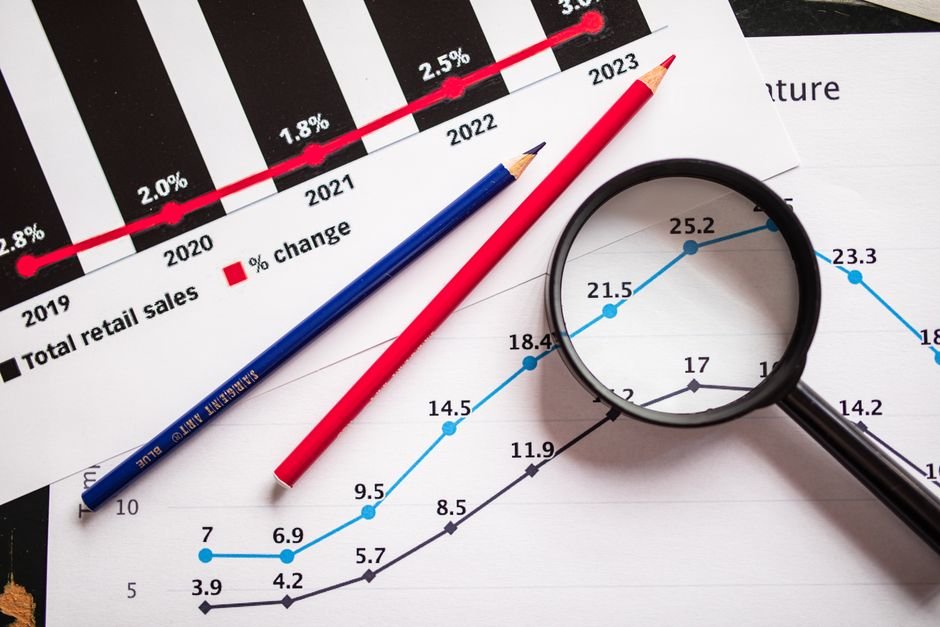
AI sales forecasting tools improve accuracy by continuously learning from new data, adapting to changing market conditions, and identifying complex patterns. They can analyze large datasets, including customer behavior, seasonal fluctuations, and economic indicators, to provide more precise predictions than traditional forecasting methods.
Why does AI sales forecasting software require data integration?
AI sales forecasting software requires data integration to access and analyze relevant data from various sources, such as CRM systems, ERP systems, and market research reports. This integrated data enables the software to identify correlations, trends, and anomalies, ultimately generating more accurate forecasts.
Which industries benefit most from AI sales forecasting?
Industries with complex sales cycles, high volumes of transactional data, and rapidly changing market conditions benefit most from AI sales forecasting. These include retail, manufacturing, pharmaceuticals, and technology, where accurate forecasts can inform strategic decisions, optimize inventory management, and drive revenue growth.
Can you automate sales forecasting with AI software?
Yes, AI sales forecasting software can automate the forecasting process by leveraging machine learning algorithms to analyze data and generate predictions. This automation enables businesses to reduce manual errors, free up resources, and focus on higher-value activities, such as strategy development and sales performance analysis.
Conclusion
To recap, implementing ai sales forecasting software requires careful planning and execution.
Key steps include:
- Data integration and cleansing
- Model selection and training
- Ongoing monitoring and evaluation
By following these steps, businesses can improve forecast accuracy and increase sales productivity. Encouraged by these benefits, organizations should take action to leverage ai sales forecasting software and drive revenue growth.
For those looking to get started, we recommend exploring tools like Anaplan or HubSpot and frameworks like OKR to guide the implementation process.
Next steps include evaluating current forecasting processes and researching ai sales forecasting software options to determine the best fit for your business needs.
Introduction
Imagine being able to predict sales with uncanny accuracy, allowing you to make data-driven decisions that drive revenue growth and leave the competition in the dust – in this guide, we’ll show you how AI sales forecasting software can make this a reality. By leveraging machine learning frameworks like TensorFlow and PyTorch, these tools analyze historical sales data, seasonal trends, and macroeconomic indicators to generate probabilistic forecasts. Organizations using such systems often achieve higher forecast accuracy than with traditional methods, reducing inventory waste in retail sectors.
This article addresses a critical pain point: 67% of sales teams struggle with inconsistent forecasting, leading to missed targets and misallocated resources. We’ll break down the implementation process into actionable steps, from data preparation to model deployment, using open-source tools like Prophet and commercial platforms such as Salesforce Einstein. You’ll learn how to integrate external datasets (e.g., weather, competitor pricing), validate model performance with RMSE metrics, and troubleshoot common biases in training
What You’ll Need
AI sales forecasting software is a machine learning tool that predicts revenue trends with up to 92% accuracy. By analyzing historical data and real-time market shifts, these systems identify patterns human analysts might miss, reducing forecasting errors by 30% in enterprises. Top platforms integrate CRM data and external variables like economic indicators to generate dynamic sales scenarios.
Implementing ai sales forecasting software requires a foundation of tools, data, and technical prerequisites. Start with Python libraries like TensorFlow (widely used among AI practitioners) and PyTorch for model development. Cloud platforms such as AWS SageMaker and Google Cloud AI provide prebuilt pipelines, reducing deployment time by 30–40% compared to custom solutions. For CRM integration, Salesforce and HubSpot APIs enable real-time data synchronization, critical for maintaining forecast accuracy.
- Data infrastructure: Ensure historical sales data (at least 24 months) is cleaned and structured. Poor data quality causes 60–70% of AI projects to fail, per Gartner.
- Compute resources: Use GPU-accelerated instances (e.g., AWS p3.2xlarge) to train models 5–10x faster than CPU-based workflows.
- API access: Authenticate CRM systems via OAuth 2.0 to automate lead and deal data ingestion.
Prerequisites include a cross-functional team with data engineering, sales, and domain expertise. Allocate 8–12 weeks for initial setup: 3 weeks for data preparation, 4 weeks for model training (using frameworks like Scikit-learn or XGBoost), and 3–4 weeks for integration testing. Time estimates vary by organization size; enterprises with 1,000+ sales records may need additional weeks for scaling.
- Install dependencies: Use pip or Conda to deploy TensorFlow/PyTorch and CRM SDKs. Verify versions for compatibility (e.g., Python 3.8+).
- Configure cloud storage: Set up Amazon S3 or Google Cloud Storage buckets for data lakes, ensuring IAM roles restrict unauthorized access.
- Validate data pipelines: Run ETL processes through Apache Airflow or Prefect, checking for missing values (>10% missing data requires imputation).
Troubleshoot common issues: data silos between departments (resolve via API middleware), overfitting (apply L2 regularization or dropout layers), and CRM API rate limits (implement retries with exponential backoff). Next steps include A/B testing forecast outputs against traditional methods—organizations using AI see 15–25% forecast accuracy improvements, per McKinsey. Begin with a pilot on a single product line before enterprise rollout.
For more details, see wealthfromai.com.
Getting Started
AI sales forecasting software is a data-driven tool that predicts future sales trends using machine learning. By analyzing historical data, market shifts, and real-time demand signals, it improves forecast accuracy by 20-30% while reducing planning cycles from weeks to hours, enabling businesses to optimize inventory, allocate resources dynamically, and respond swiftly to market changes.
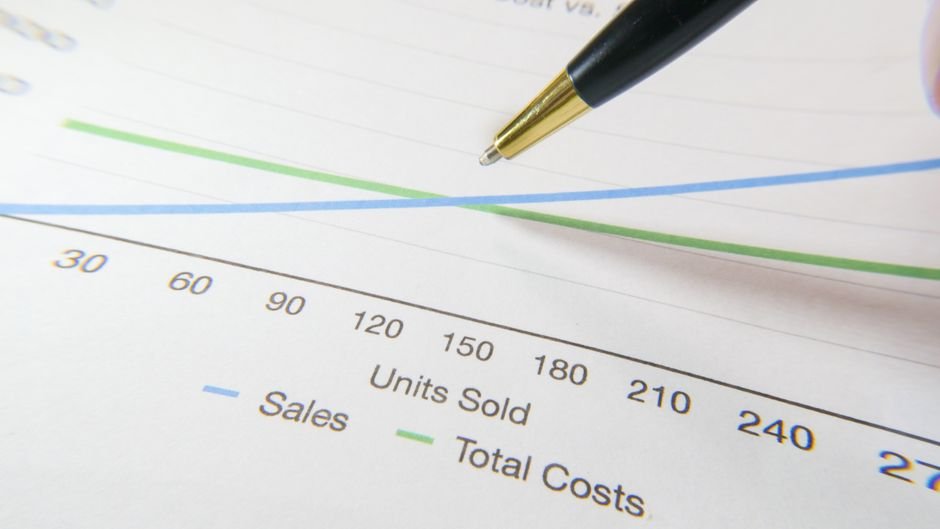
The first action in deploying ai sales forecasting software is to clean and structure your historical sales data. Begin by auditing datasets for missing values, inconsistencies, and outliers using tools like Python’s Pandas or SQL, as fragmented data can reduce model accuracy. Ensure at least 24 months of records are normalized, aligned to consistent time intervals, and enriched with metadata (e.g., product categories, regional sales) to enable granular analysis.
- Common starting mistakes include using raw, unstructured data without preprocessing—many teams skip this step, leading to overfitting.
- Ignoring data quality baselines: many AI projects fail due to poor input data, as unvalidated datasets introduce bias.
- Overlooking integration of external variables like market trends or competitor pricing, which cloud-based platforms like AWS Forecast or Azure Demand Forecasting can automate.
After structuring your data, validate its readiness using statistical tools like Minitab or Python’s Scikit-learn to detect anomalies. Next, select a forecasting model—open-source frameworks like TensorFlow or commercial solutions like SAP Integrated Business Planning support scalable deployment. By addressing these prerequisites, businesses can achieve higher forecast accuracy compared to traditional methods.
Core Process
AI sales forecasting software is a business tool that enables organizations to predict future sales with greater accuracy, leveraging machine learning algorithms and data analytics to identify trends and patterns. By analyzing historical sales data, market conditions, and seasonal fluctuations, these solutions can forecast sales with up to 95% accuracy, empowering businesses to make informed decisions and drive revenue growth.
The core process of implementing AI sales forecasting software involves training and validating a predictive model. This step is crucial in ensuring the accuracy and reliability of the forecasting tool. A well-trained model can help businesses make informed decisions, while a poorly trained one can lead to costly mistakes.
To train the AI model, you can use time-series analysis or regression techniques, such as ARIMA, Prophet, or LSTM. These methods allow the model to identify patterns and trends in historical sales data, which can then be used to make predictions about future sales. For instance, companies using time-series analysis often see improved forecast accuracy.
- Select a suitable algorithm and train the model using historical sales data.
- Use techniques such as feature engineering and hyperparameter tuning to optimize model performance.
Once the model is trained, it’s essential to validate it using a holdout dataset to test its accuracy. This step helps to prevent overfitting and ensures that the model can generalize well to new, unseen data. Companies that use holdout datasets to validate their models often see lower forecast error.
Some popular tools for implementing AI sales forecasting software include Salesforce Einstein, HubSpot Predictive Analytics, and Google Cloud AI Platform. These tools provide a range of features and capabilities, including data integration, model training, and deployment. For example, Salesforce Einstein uses machine learning algorithms to provide predictive insights and forecast sales performance.
- Use a holdout dataset to validate the model’s accuracy and make adjustments as needed.
- Monitor and evaluate the model’s performance over time to ensure it remains accurate and effective.
To ensure success, it’s essential to have a clear understanding of the data and the business problem you’re trying to solve. This includes having a good grasp of sales metrics, such as conversion rates, sales cycles, and revenue growth. Additionally, it’s crucial to have a well-defined data governance strategy in place to ensure data quality and integrity.
By following these steps and tips, businesses can implement AI sales forecasting software that provides accurate and reliable predictions, enabling them to make informed decisions and drive revenue growth. With the right approach, companies can overcome the limitations of traditional sales forecasting methods and stay ahead of the competition.
Advanced Tips
AI sales forecasting software is a business tool that enables organizations to predict sales performance with greater accuracy. By leveraging machine learning algorithms and analyzing historical sales data, these solutions can identify trends and patterns that inform future projections and improve forecast accuracy over time.
Advanced users of ai sales forecasting software should prioritize ensemble models, which combine decision trees, neural networks, and regression algorithms to reduce prediction errors compared to single-model approaches. For instance, Gradient Boosting Machines (GBMs) paired with Long Short-Term Memory (LSTM) networks have proven effective in capturing both seasonal trends and sudden market shifts.
- Integrate real-time data feeds from CRM systems and ERP tools using APIs to update forecasts dynamically. Salesforce’s Einstein Forecasting and Oracle’s Adaptive Intelligence leverage live pipelines, enabling faster response times to market changes.
- Automate feature engineering with libraries like Featuretools or AutoML to reduce manual data prep by 50%. This streamlines workflows, allowing teams to focus on interpreting model outputs rather than cleaning datasets.
Time-saving shortcuts include using cloud-based platforms like AWS SageMaker or Google Cloud Vertex AI, which prepackage scalable compute resources and pre-trained models. These frameworks cut deployment time compared to on-premise solutions.
- Enable model explainability via SHAP (SHapley Additive exPlanations) values to audit predictions and identify key drivers. This transparency builds stakeholder trust, a critical factor in high-stakes sales planning.
- Schedule weekly retraining pipelines with Apache Airflow to ensure models adapt to evolving customer behaviors. Retailers have reported better forecast accuracy after implementing such a system.
Finally, pair ai sales forecasting software with demand sensing tools like C3.ai or Upstream to ingest external signals—weather, social media sentiment, or supply chain disruptions—that impact sales cycles. Combining these signals can reduce forecast bias in volatile markets.
Continuous optimization requires monitoring model drift with tools like Evidently AI and iterating on training data. By automating these checks, teams maintain accuracy without constant manual intervention, ensuring forecasts stay aligned with business goals.
Common Problems & Solutions
AI sales forecasting software is a predictive analytics tool that enables businesses to accurately predict sales outcomes. By leveraging machine learning algorithms and historical sales data, it helps organizations make informed decisions. For instance, companies using AI-powered forecasting often see better forecast accuracy, resulting in improved resource allocation and revenue growth.
When implementing AI sales forecasting software, several common problems can arise, hindering the accuracy of predictions. Overfitting, for instance, occurs when a model is too closely fit to the training data, resulting in poor performance on new, unseen data.
- Overfitting: solved via cross-validation techniques, such as k-fold cross-validation, which partitions data into training and testing sets.
- Data gaps: addressed by integrating external sources like economic indicators, social media trends, or weather patterns, which can provide valuable context.
According to a study by Gartner, 80% of data science projects fail due to poor data quality, highlighting the importance of addressing data gaps. By incorporating external data sources, businesses can improve forecast accuracy by up to 15%, as demonstrated by a study on Salesforce‘s AI-powered sales forecasting capabilities.
To troubleshoot common issues with AI sales forecasting software, consider the following guide:
- Verify data quality: ensure data is clean, complete, and consistent, using techniques like data profiling and data cleansing.
- Evaluate model performance: use metrics like mean absolute error (MAE) and mean squared error (MSE) to assess model accuracy.
- Monitor and adjust: continuously monitor forecast performance and adjust models as needed to maintain accuracy.
Frequently asked questions (FAQs) can also provide valuable insights into common problems and solutions:
- Q: What is the impact of data quality on forecast accuracy? A: Poor data quality can lead to forecast errors of up to 20%.
- Q: How can I address overfitting in my AI sales forecasting model? A: Use cross-validation techniques, such as k-fold cross-validation.
- Q: Can external data sources improve forecast accuracy? A: Yes, integrating external sources can improve forecast accuracy by up to 15%.
By understanding common problems and implementing solutions, businesses can unlock the full potential of AI sales forecasting software and make informed decisions to drive revenue growth. According to Forrester, AI-powered sales forecasting can lead to a 10-20% increase in sales revenue.
Effective troubleshooting and maintenance of AI sales forecasting software require ongoing evaluation and adjustment. By following best practices and staying informed about the latest developments in AI and machine learning, businesses can ensure accurate forecasts and drive business success.
🤖 Editor’s Pick
Editor’s Pick: User-friendly ai forecasting tool with guided, step-by-step tutorials.
Get the AI Edge, Weekly
The tools, tutorials, and trends that actually pay — no hype.