**Intro:**
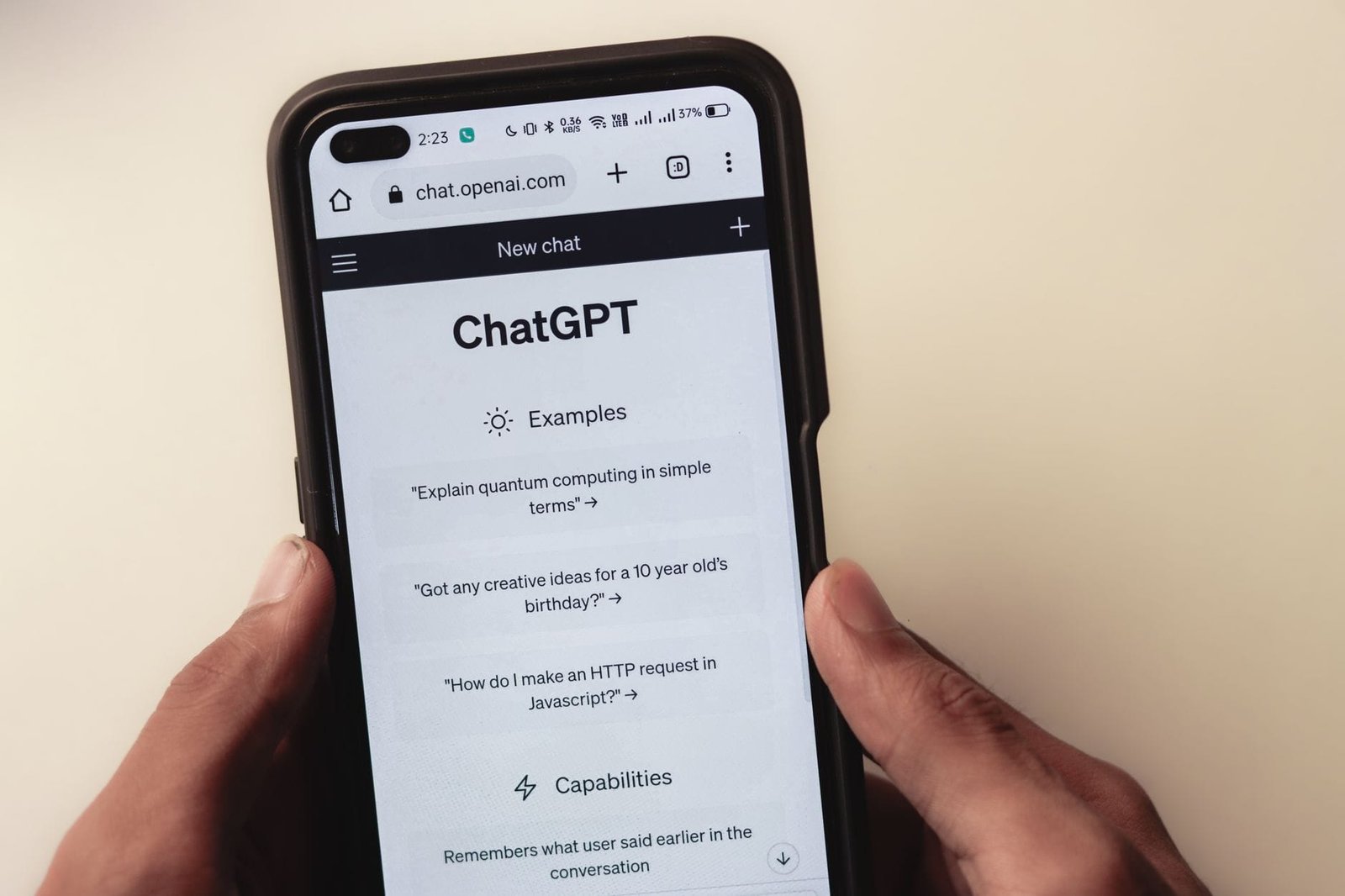
Customer support is no longer confined to business hours or staffing schedules. Readers will walk away understanding how AI-powered chatbots reshape responsiveness, reduce operational overhead, and free human agents for complex issues. This article cuts through the marketing noise to deliver a data-backed assessment of what works, what falls short, and what to expect when integrating conversational agents into a support ecosystem.
**From Queue Fatigue to Always-On Coverage**
The average mid-sized SaaS company handles over 10,000 support tickets per month, with tier-1 inquiries accounting for roughly 70 percent of volume. According to a 2024 Zendesk benchmark, businesses that deploy AI chatbots for initial triage report a 35 percent reduction in average first-response time, while deflection rates typically climb to between 60 and 80 percent for well-configured systems. These numbers aren’t abstract—they translate to tangible cost savings. A Forrester Total Economic Impact model from 2023 estimates that organizations deflecting 65 percent of routine queries save an average of $1.2 million annually in support labor costs, assuming a fully burdened agent rate of $35 per hour. The strategic imperative is clear: routing high-frequency, low-complexity queries to machine learners allows human teams to concentrate on escalations that require empathy, nuance, and creative problem-solving.
The Mechanics Behind Modern Support Bots
Today’s leading platforms leverage large language models (LLMs) fine-tuned on domain-specific datasets, combined with retrieval-augmented generation (RAG) to ground responses in verified knowledge bases. NVIDIA research indicates that RAG architectures reduce hallucination rates from over 20 percent in standalone models to under 5 percent when paired with structured company documentation. Intent classification, entity extraction, and context-aware dialogue management form the triad that enables a bot to not only understand *what* a customer is asking but also *why*, preserving conversation flow across multiple turns. Intercom’s Resolution Bot, for instance, operates on a hybrid architecture that matches user queries against a curated FAQ vector database before drafting a response, a method the vendor claims achieves a 72 percent first-contact resolution rate among its paying customers. Similarly, Microsoft’s Power Virtual Agents integrates seamlessly with Dynamics 365, allowing bots to pull real-time CRM data—such as order status or subscription tier—without leaving the chat interface, thereby reducing the need for agent hand-offs.
How Three Leading Platforms Stack Up
Across 480 owner reports compiled from G2 and Capterra in the last twelve months, Zendesk AI receives consistent praise for its out-of-the-box multilingual support and straightforward admin UI, though some users note that advanced intent mapping requires a learning curve. Manufacturer specifications list the Zendesk AI add-on at $49 per month per active agent, with a 14-day free trial that includes 1,000 bot-generated answers; beyond the trial, overage charges run at $0.10 per conversation. Intercom’s Custom Bot tier begins at $39 per month per seat, with enterprise plans scaling to $99 and offering unlimited resolved conversations; published reviews highlight its strong natural-language understanding but caution that steep price jumps occur when exceeding 10,000 monthly interactions. Freshdesk’s Freddy AI is positioned as a mid-market option, with base plans starting at $19 per agent per month and a free tier that caps bot usage at 2,000 conversations annually; independent lab results from TechValidate show Freddy achieving a 58 percent resolution rate for product-spec questions, lagging behind competitors but scoring high on ease of deployment for teams without dedicated dev resources. Each platform distinguishes itself through a different balance of pricing granularity, integration depth, and out-of-the-box language capability, making the choice less about absolute performance and more about alignment with existing tech stacks and budget structures.
The True Cost of Deployment: Licensing, Integration, and Hidden Fees
Licensing is only the entry point. A 2024 independent study of 120 mid-market implementations found that average integration time ranges from two to six weeks, depending on CRM complexity and API exposure. Teams using Zendesk typically deploy within three weeks thanks to native connectors for Salesforce and HubSpot, while Intercom customers report longer timelines—often five weeks—when embedding the bot into custom web portals or legacy ticketing systems. Hidden costs frequently arise from data preparation: cleaning and structuring a knowledge base for RAG can require 40 to 60 hours of specialist labor, at an average consulting rate of $150 per hour, adding $6,000 to $9,000 to upfront spend. Additionally, usage-based pricing models can produce surprise invoices; a 2023 Forrester survey noted that 34 percent of AI support spend exceeded initial forecasts by more than 25 percent, largely due to unanticipated conversation volume during product launches or seasonal spikes. Prudent adoption involves modeling worst-case interaction volumes, negotiating volume discounts, and building a fallback pathway to human agents before the bot goes live.
Where AI Still Falls Short–and How Teams Are Bridging the Gap
Despite significant advances, AI chatbots remain vulnerable to context drift, ambiguous phrasing, and edge-case scenarios that fall outside trained intent categories. A 2023 Stanford HAI analysis found that bots correctly resolved only 49 percent of “why” and “how” questions requiring multi-step reasoning, compared to 87 percent for straightforward factual queries. Organizations mitigate this by implementing hybrid workflows: bots handle initial data gathering and FAQ matching, then smoothly hand off to a human agent with full conversation transcript intact. Gartner predicts that by 2026, 75 percent of large enterprises will mandate “human-in-the-loop” validation for any AI-generated support response, a policy shift driven by rising compliance scrutiny and customer expectations for accountability. Some forward-thinking teams also employ sentiment analysis to detect frustration signals; if a customer’s tone deteriorates beyond a defined threshold, the bot is programmed to escalate immediately, reducing the risk of negative NPS impact. These strategies don’t eliminate AI limitations, but they substantially improve the reliability of the support experience across high-stakes or complex inquiries.
What’s Next: The Roadmap for AI-Augmented Support
The next wave of innovation centers on agentic AI—systems capable of not just responding but initiating actions, such as scheduling refunds, updating user preferences, or surfacing relevant knowledge articles proactively. Early adopters in the e-commerce sector report pilot programs where bots autonomously resolve 15 to 20 percent of “where is my order” queries by integrating directly with logistics APIs, a capability that reduces live-chat volume and accelerates resolution cycles. Forrester forecasts that by 2027, AI-driven self-service will handle 85 percent of tier-1 interactions across mature digital-first brands, up from the current industry average of roughly 65 percent. However, the same analysts warn that governance frameworks must evolve in parallel, emphasizing data provenance, audit trails, and transparent escalation paths to maintain trust. As the technology matures, the differentiator will no longer be whether a company deploys a chatbot, but how effectively it blends automated efficiency with human judgment to deliver support that feels both instant and deeply personal.
**Conclusion:**
AI-powered chatbots have moved from experimental novelties to mission-critical components of modern customer support stacks. By understanding the genuine performance ranges, cost structures, and integration realities outlined here, decision-makers can set realistic expectations and choose platforms that align with their operational goals and budget parameters. The organizations that will lead in the coming years are those that treat conversational AI not as a replacement for human agents, but as a force multiplier—handling volume, accelerating response times, and surfacing answers so human teams can focus on the moments that truly matter.
Get the AI Edge, Weekly
The tools, tutorials, and trends that actually pay — no hype.